Watermelon Radish and Purple Daikon: Vibrant Root Vegetables for Seasonal Eating
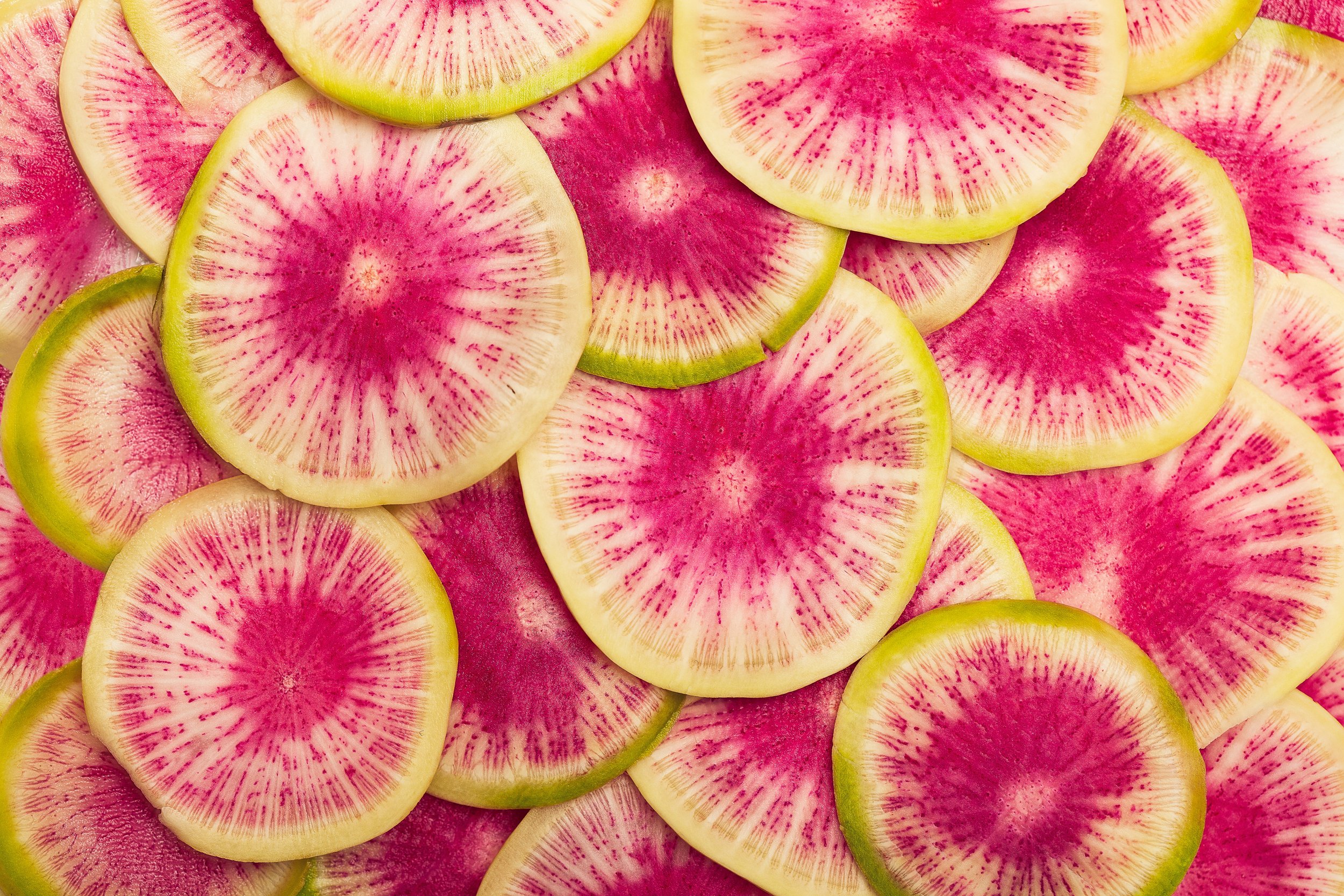
Watermelon radish and purple daikon are two root vegetables that grow quietly beneath the soil, storing nourishment until the right moment. Though different in color and intensity, both offer crisp texture, digestive support, and a grounding presence that fits naturally into seasonal, slow living.
On our small organic farm, outside of Watseka, Illinois, these radishes are grown for more than their beauty. They’re resilient, nourishing, and deeply aligned with cooler months when the body craves balance rather than excess.
Health Benefits of Watermelon Radish and Purple Daikon
Both watermelon radish and purple daikon belong to the radish family, long valued for their digestive and cleansing qualities.
They’re rich in vitamin C, supporting immune health and skin, and contain natural compounds that help:
Support digestion and reduce heaviness
Encourage healthy circulation
Support liver and detox pathways
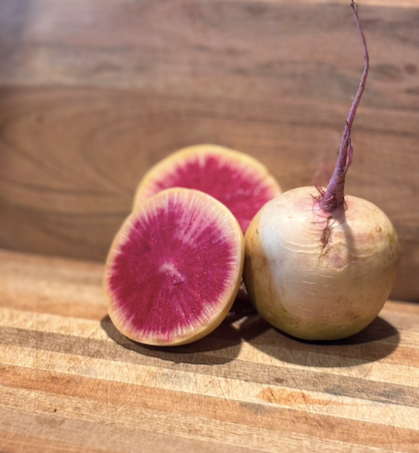
Purple daikon tends to have a stronger, more peppery bite, which can stimulate digestion and warmth in the body. Watermelon radish is milder and slightly sweet, offering a cooling, hydrating quality.
Together, they create balance. One warms, one cools. Both ground.
When Are Watermelon Radish and Purple Daikon in Season?
These radishes thrive in cool weather and are typically harvested from late fall through early spring.
Cool temperatures allow them to grow slowly, improving flavor and texture. They store well, making them ideal for winter kitchens when fresh greens are limited but nourishment is still needed.
This makes them a natural choice for seasonal eating, especially during times of transition between seasons.
Easy Ways to Prepare Watermelon Radish and Purple Daikon
You don’t need complicated recipes to enjoy these roots. I find that the more complicated the recipes are for fresh produce, the less likely I am to cook with them. One of my FAVORITE new recipes can use either of these radishes. You can check out that recipe in another blog post here.
1. Thinly Sliced and Raw
Great for salads, grain bowls, or alongside meals. Slice thin to soften the intensity, especially with purple daikon.
2. Roasted
Roasting mellows spice and brings out sweetness. Toss with olive oil and roast until tender. This is my favorite way to enjoy any radish as I’m not a lover of their peppery qualities.
3. Pickled
Both varieties pickle beautifully and keep their color well. A simple vinegar and salt brine is enough.
4. Added to Soups
Slice and add near the end of cooking for texture and gentle warmth. This is also a great choice if you’d like to remove some of the bite.
A Brief History of Daikon Radishes
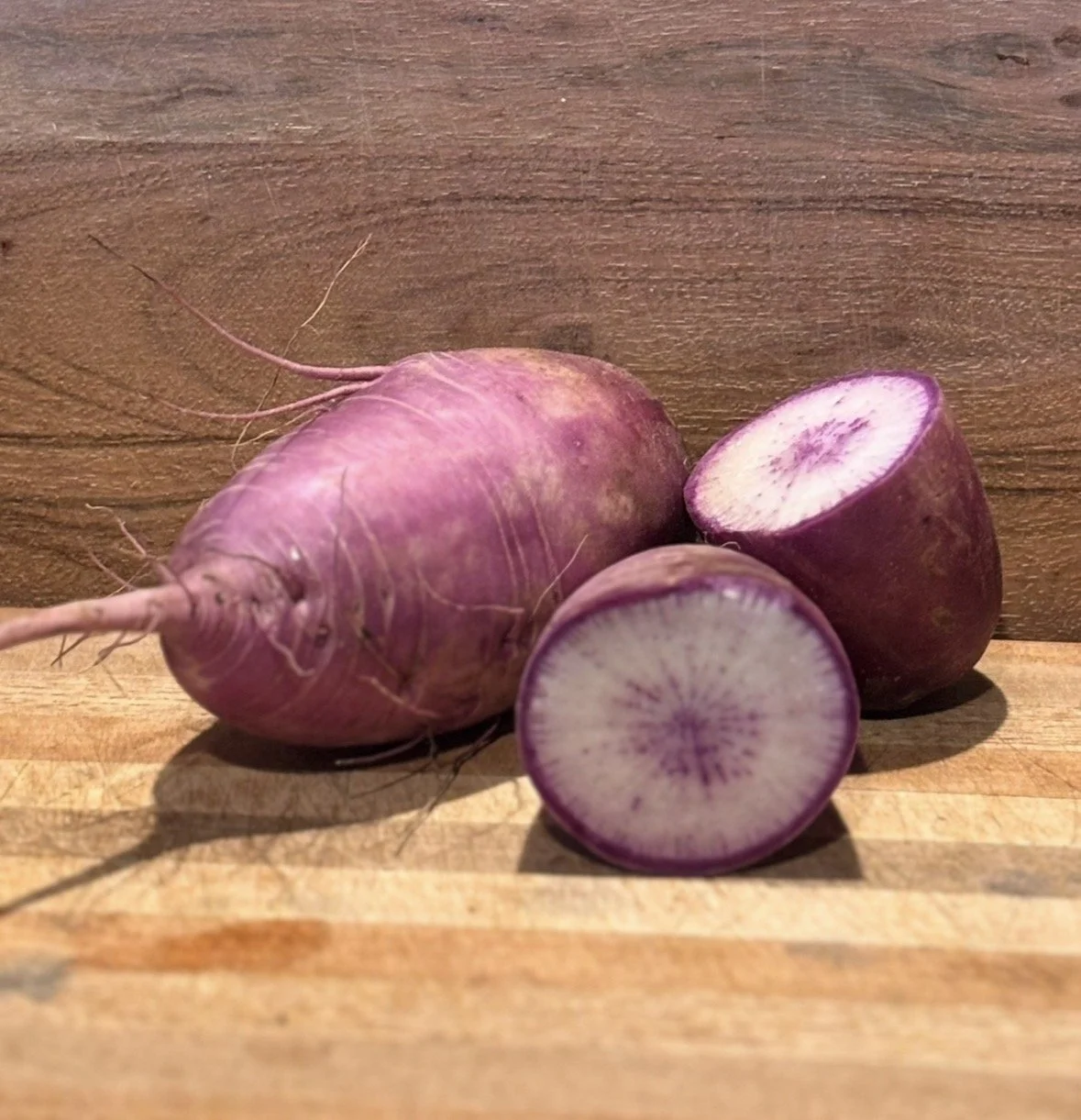
Daikon radishes have been cultivated for thousands of years, especially in East Asian food traditions, where they were valued for their ability to support digestion and balance heavier foods.
Watermelon radish is a type of daikon, traditionally grown for both nourishment and medicinal support. Long before they became visually popular, they were grown because they were reliable, storing well and feeding communities through colder months.
Why We Grow These Radishes on Our Farm
Watermelon radish and purple daikon remind us that nourishment doesn’t need to be loud. They grow underground, strengthen with time, and offer exactly what’s needed for the season.
They fit naturally into a slower way of living, one that honors land, patience, and simple meals shared with others.
They’re grounding in the colder months, nutrient-packed, and bulky with fiber. They are also detoxifying which can really balance out excessive sugary and salty holiday foods.
I hope you’ll give them a try! And if you do, let me know how you prepared them. We are always open to new ideas!