Collard Greens: A Grounding, Nourishing Green for Slow Living Seasons
Collard greens are one of those vegetables that don’t rush. They grow slowly, thrive in cooler temperatures, and get better with time. On our small organic farm, collards are a staple of the colder months. They’re deeply nourishing, grounding, and surprisingly versatile, especially when you know how to prepare them.
If you’ve ever walked past collards at a market unsure what to do with them, you’re not alone. But once you understand their benefits, seasonality, and simple preparation methods, they become a go-to green that supports both body and rhythm of life.
Health Benefits of Collard Greens
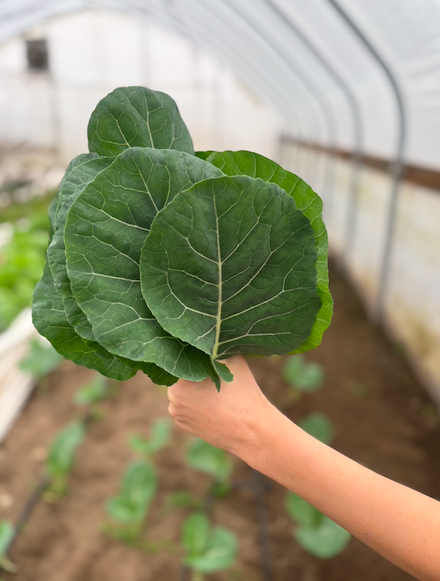
Collard greens are packed with nutrients that support steady energy and long-term health rather than quick fixes.
They’re rich in vitamins A, C, and K, which support:
Immune health, especially during colder months
Bone strength and healthy blood clotting
Skin and eye health
Collards are also high in calcium and magnesium, making them a wonderful plant-based option for supporting bones and muscles.
Their fiber content helps with digestion and blood sugar balance, offering that slow, sustained energy that pairs well with seasonal living. Instead of spikes and crashes, collards help keep things steady.
From a more holistic perspective, collard greens are considered deeply grounding. Their dark leaves and sturdy structure mirror the kind of nourishment many of us crave in fall and winter, when life naturally asks us to slow down.
When Are Collard Greens in Season?
Collard greens thrive in cool weather and are typically in season from late fall through early spring, depending on your climate.
One of the most interesting things about collards is that frost actually improves their flavor. Cold temperatures convert some of their starches into sugars, making the leaves more tender and slightly sweet.
This makes collards a perfect winter green, aligning with a slower, more inward season of life when warm meals and grounding foods feel especially supportive.
Easy Ways to Prepare Collard Greens
Collards have a reputation for being tough, but they don’t have to be.
Here are a few simple, approachable ways to prepare them.
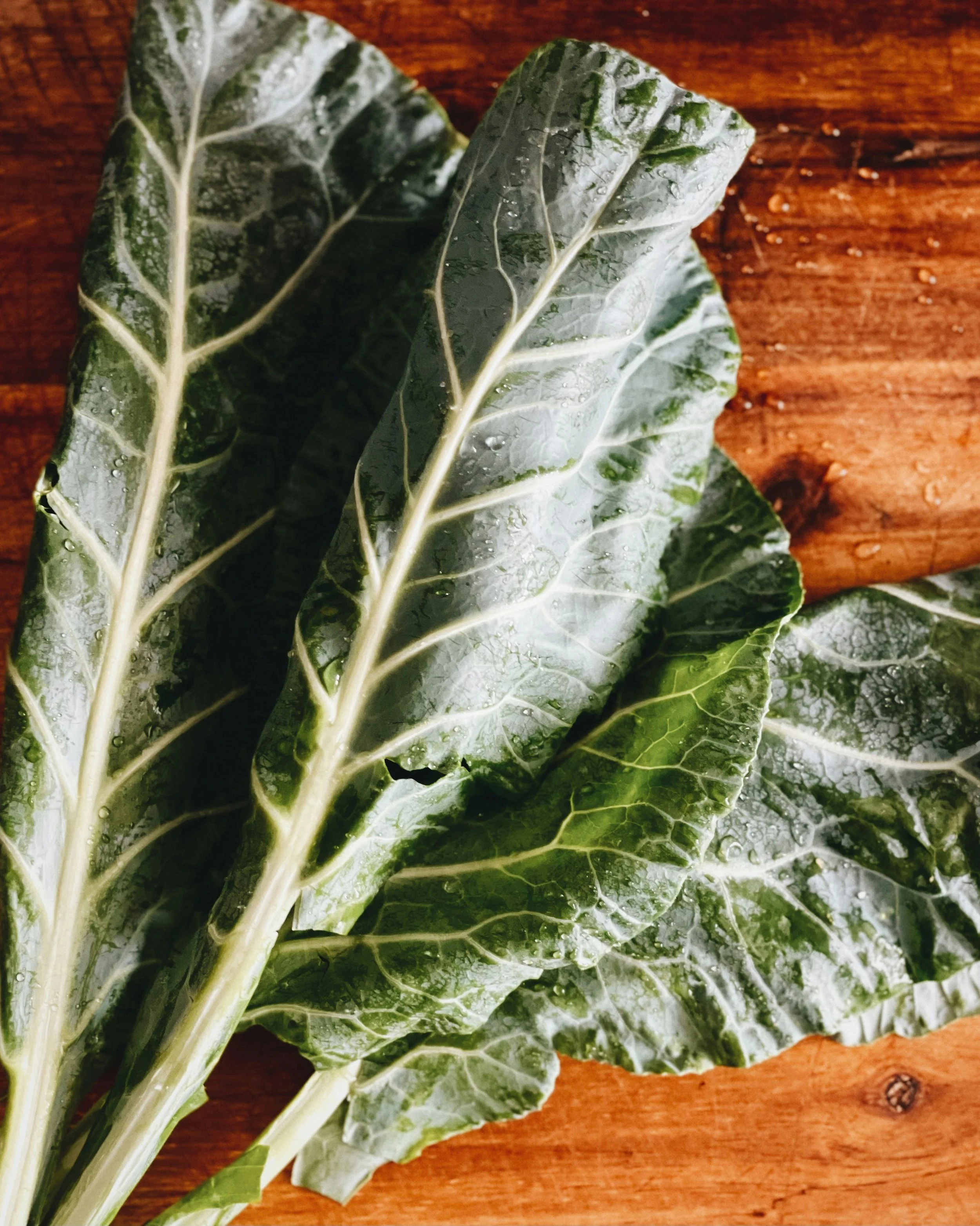
1. Simple Sauté
Remove the thick center stem
Slice leaves into ribbons
Sauté gently with olive oil, garlic, and a pinch of salt
Finish with lemon or apple cider vinegar
2. Slow Simmered
Traditionally, collards are simmered low and slow, which softens the leaves and makes them easier to digest. This method works beautifully with onions, garlic, and a bit of broth.
3. Collard Wraps
Blanch leaves briefly and use them as wraps for grains, roasted vegetables, or beans. A great alternative to tortillas or bread.
4. Add to Soups and Stews
Collards hold their shape well, making them ideal for hearty winter soups.
The key is not rushing them. Collards respond well to patience.
A Brief History of Collard Greens
Collard greens have deep roots, both literally and culturally.
They are part of the Brassica family, which includes cabbage, kale, and broccoli. Collards have been grown for thousands of years, with origins traced back to the eastern Mediterranean.
In the United States, collards became especially significant in Southern and African American food traditions, where they were cultivated for their resilience, affordability, and ability to nourish large families.
Historically, collards were a survival crop, dependable and sustaining. Today, they still carry that energy: food that feeds more than just hunger.
Why We Love Growing Collards on Our Farm
Collard greens remind us that nourishment doesn’t need to be flashy. They grow steadily, withstand cold, and offer deep, lasting support.
They fit naturally into a slower way of living, one that honors seasons, land, and the body’s need for grounding foods. Whether you’re cooking for yourself, your family, or gathering around a shared table, collards offer nourishment that goes beyond nutrition.