Red & Green Curly Kale: Deeply Nourishing Winter Greens
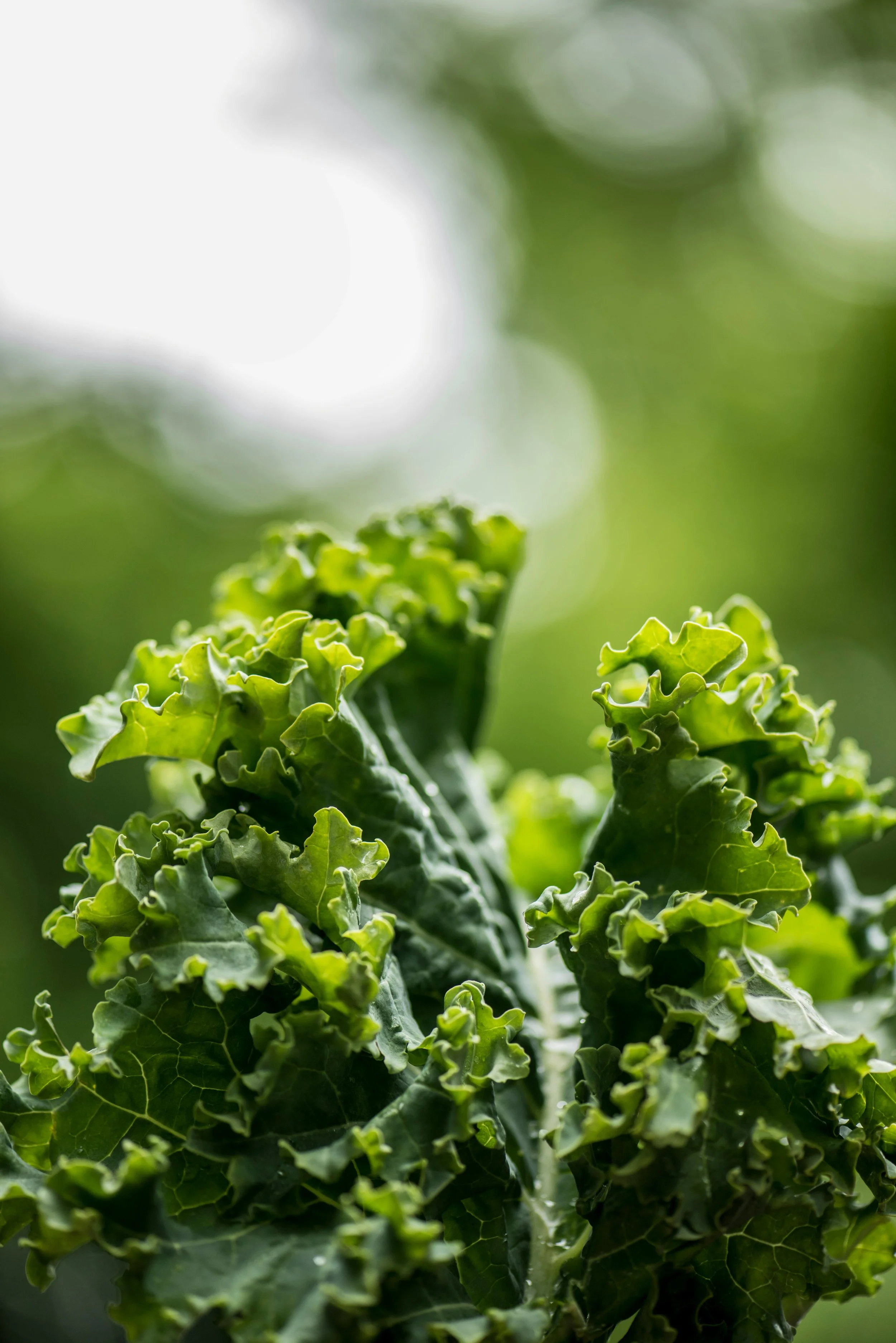
Red and green curly kale are classic cold-season greens known for their ruffled leaves, sturdy texture, and deep nourishment. While their colors differ slightly, both offer a similar earthy flavor and a dense nutritional profile that supports the body during colder months.
These are greens that feel grounding. They’re not delicate or fleeting, but meant to be cooked, softened, and slowly integrated into meals that warm from the inside out.
Health Benefits of Red and Green Curly Kale
Both red and green curly kale are rich in vitamins A, C, and K, supporting immune function, skin health, and strong bones. They’re also high in fiber, which supports digestion and steady energy.
Red curly kale contains additional anthocyanins, antioxidant compounds that give it its deep purple-red color and help protect cells from oxidative stress.
Compared to more tender greens, curly kale is:
More nutrient-dense
Higher in fiber
Better suited for cooking and softening
From a holistic perspective, kale offers strength and stability. It’s the kind of food that supports resilience, especially during winter when the body benefits from denser, mineral-rich meals.
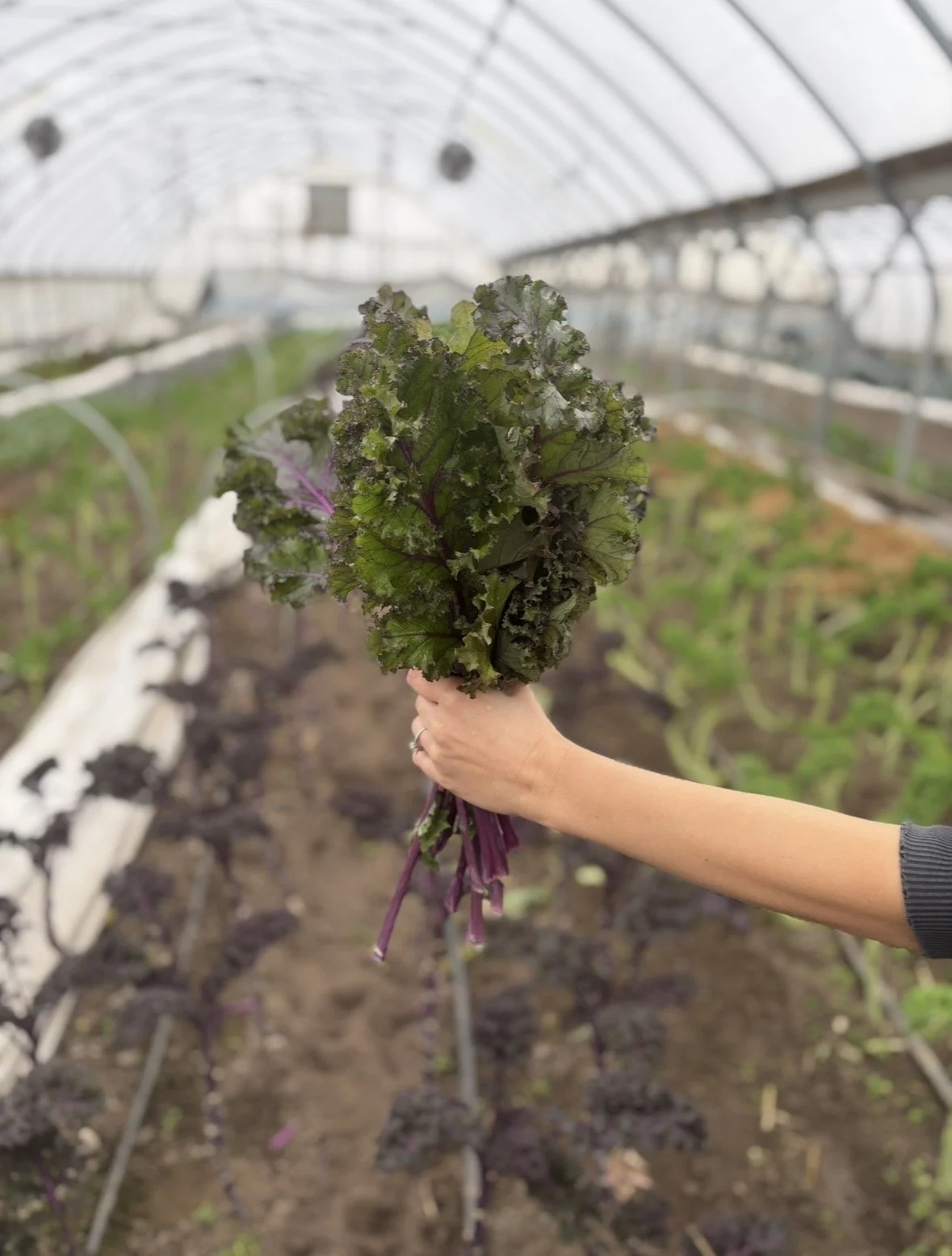
When Are Red and Green Curly Kale in Season?
Curly kale thrives in cool weather and is typically in season from late fall through early spring. Exposure to frost actually improves its flavor, making the leaves sweeter and less bitter.
Because kale grows best in cooler temperatures, it aligns naturally with winter eating and slower, more grounding meals.
Easy Ways to Prepare Curly Kale
Curly kale benefits from a bit of care in preparation, allowing its texture to soften and its flavor to mellow.
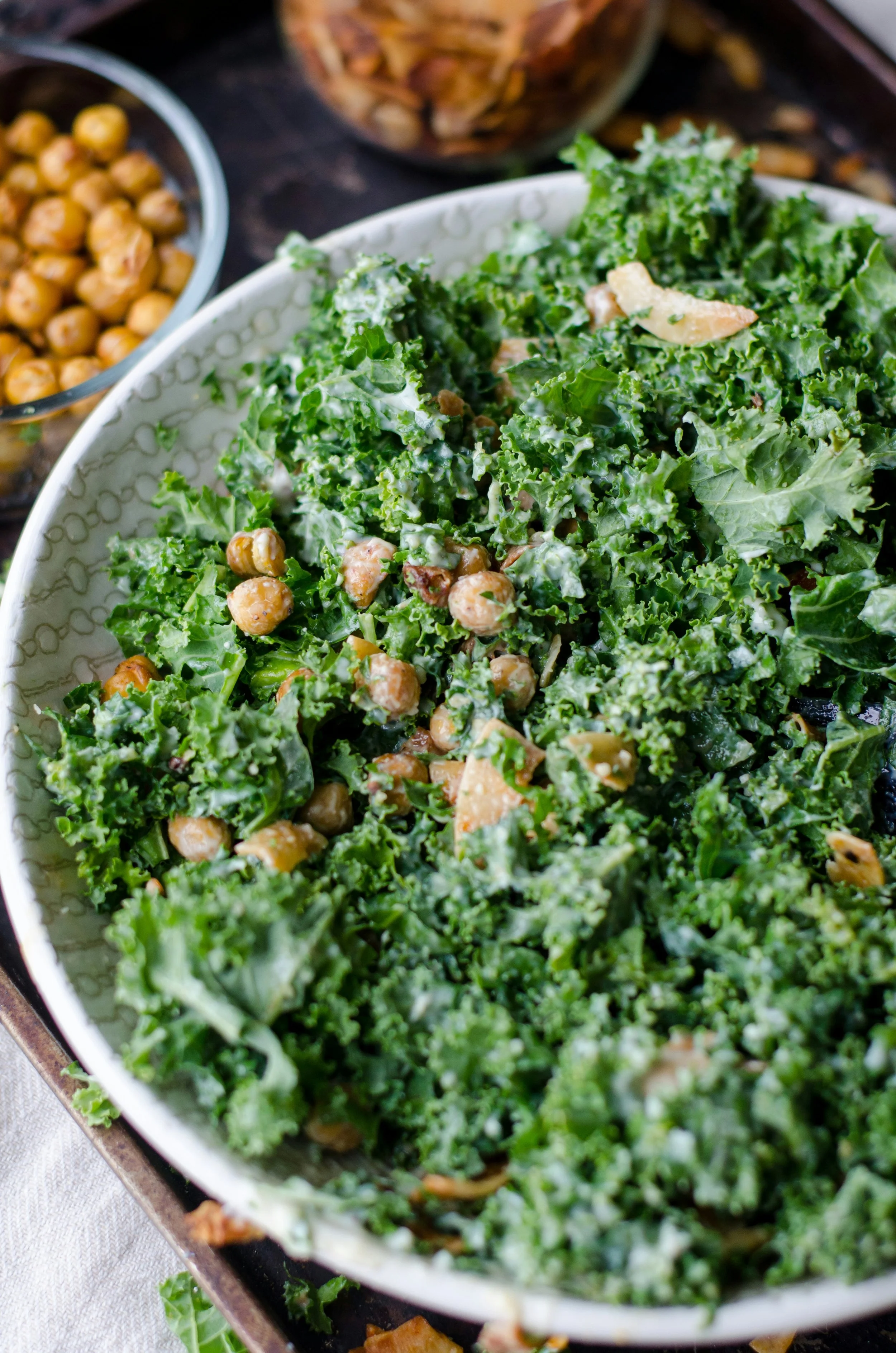
1. Massaged Raw
Remove stems and massage leaves with olive oil and a pinch of salt until softened. This breaks down the fibers and makes kale easier to digest.
2. Sautéed or Braised
Cook slowly with olive oil, garlic, or broth until tender. Longer cooking transforms kale into something deeply comforting.
3. In Soups and Stews
Add kale earlier in cooking so it has time to soften fully and release its nutrients into the broth.
4. Roasted
Toss with olive oil and roast until edges are crisp and centers are tender.
Red vs. Green Curly Kale: What’s the Difference?
The difference between red and green curly kale is subtle.
Red curly kale has a slightly more peppery flavor and higher antioxidant content.
Green curly kale is a bit milder and more familiar in taste.
Both soften similarly when cooked and can be used interchangeably in most recipes.
How to Store Curly Kale
Curly kale stores well, making it a reliable green for winter cooking.
Keep unwashed in the refrigerator crisper
Store loosely in a breathable bag
Remove stems only when ready to use
Properly stored, curly kale can last up to two weeks, especially when kept cold and dry.
Why We Value Curly Kale
Red and green curly kale represent the kind of food that sustains rather than rushes. They ask for time, warmth, and attention, and in return offer deep nourishment and steady energy.
These are greens that carry people through winter. They soften with patience, nourish with consistency, and remind us that some foods are meant to be cooked slowly and eaten intentionally.